

As a blogger, you need to have a clear understanding of some of the important blogging terms if you really want to survive in this blogging industry.
If you played professional football, do you think the “4-3-3” would be a mystery for you?
I don’t think so!
It’s the same thing in professional blogging. You need to understand some of the important blogging vocabularies if you really want to make it as a blogger.
In this blog post, thanks to WordPress.org and the WordPress community, I have compiled a list of important blogging terms and their meaning, so that as a blogger, whether beginner or professional, you will be able to have a clear understanding of some of the basic and commonly used blogging terms in the industry.
Let’s get started.
Important Blogging Terms You Should Be Aware Of
Some of these expressions are not terms you need to worry so much about. However, they are really going to help if you are a little familiar with the following blogging terms.
1. Ajax
A technique that allows users to send and receive data without reloading the entire page.
2. Akismet
A popular WordPress plugin designed to filter spam. It is mostly free but its premium features can be very helpful.
3. Alexa
An analytics website often referred to when comparing websites against one another. It provides ranking and information on traffic, audience demographics, and inbound links.
4. Algorithm
The formula that determines how one of your pages or posts ranks within a search engine’s search results.
5. Alt attribute
The alt attribute within HTML or XML documents specify alternative text to be displayed should elements not render on a page correctly.
6. Anchor text
The clickable text in a hyperlink. The choice of words used in anchor text is important for search engine optimization.
7. Audience
These are the people who read your blog, follow your tweets, like your Facebook page, and share your content.
8. Avatar
An avatar is a personalized graphical illustration that represents a user.
9. Backlinks
Links that point from one website to another.
10. Bandwidth
The amount of traffic and data that is allowed to occur between your website and the internet. Usually associated with web hosting packages.
11. Banner
A banner can refer to a blog header. It is also sometimes used as another name for a blog ad. A banner can be an image with information about a product that can be placed anywhere on the blog for advertisement purposes.
12. Blackhat SEO
Methods of improving a website’s ranking in search engines that are considered deceptive.
13. Blog
A type of website with content called posts that are often presented in reverse chronological order. Visitors can usually leave comments on posts.
14. Blogger
A person who owns a blog. Also the name of a blogging platform owned by Google.
15. Blogosphere
The blogging community.
16. Blog roll
A collection of links on a blog. Usually, favorites as chosen by the blog’s owner/s.
17. Bookmark
To save a URL for visiting later.
18. Bounce rate
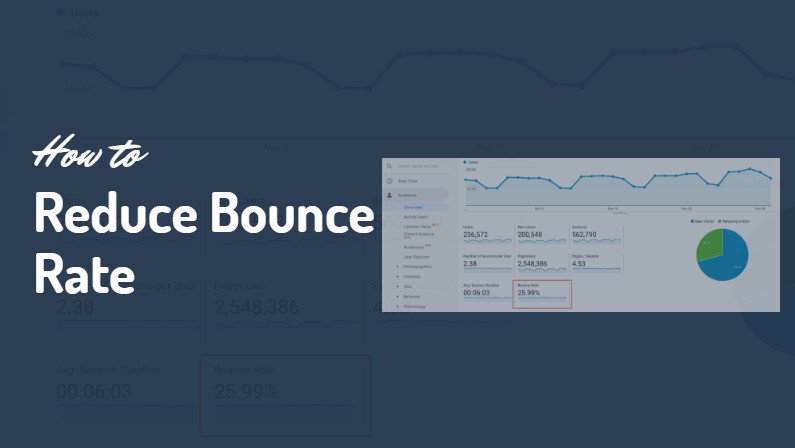
The percentage of people who arrived on your site and only viewed one page before leaving.
19. Captcha
Letters and/or numbers you’re sometimes required to enter before submitting a comment, password or other data on a website, designed to ensure the response is created by a human and not a computer.
20. Category
Each post in WordPress goes under a category. Categorization allows posts to be grouped with others of similar content and helps in the navigation of a site.
21. Child theme
A child theme is a theme that inherits the functions of another theme (a parent theme) and allows you to modify it.
22. Click-through rate
The number of times an ad is clicked presented as a percentage of the number of impressions it receives.
23. Cloaked links
These are affiliate links that have been converted into a different-looking link (e.g.: yourblogname.com/recommends/shopname) for reasons including ease of listing or sharing, tracking clicks, or to simply make them look less like an affiliate link.
24. CMS
It is a short form of Content Management System. It is Software that allows the creation, publishing, and management of a website’s content. A good example is WordPress.
25. Comments
The thoughts or feedback left by a blog’s readers in relation to a blog post. You can control and regulate comments by filters for language and content.
Comments can be queued for approval before they are visible on the web site. This is useful in dealing with spam comments.
26. Commission
Income an affiliate earns for generating a sale or lead for a merchant’s products or services.
27. Content
The content consists of text, images, or other information shared in posts. A Content Management System changes and updates content, rather than the structural or graphic design of a website.
28. Conversion rate
The percentage of visitors who convert visits or page views into some type of action, such as signing up for a newsletter, or purchasing a product.
29. Contextual advertising
Advertisements that display on a website based on a visitor’s search history, or words (keywords) that have been used on the website.
30. Cookie
Small text files stored on your computer designed to save information on a user’s computer for a blog or website to retrieve later (such as login details.
31. cPanel
A cPanel is a popular web-based administration tool that many hosting providers provide to allow users to configure their own accounts using an easy-to-use interface.
32. CPC
Cost Per Click. The amount you may earn each time a visitor clicks on an ad displayed on your blog. The amount is determined by the advertiser.
33. CSS
Cascading Style Sheets. This is a W3C open standard programming language for specifying how a web page is presented. It allows web site designers to create formatting and layout for a web site independently of its content.
Read also: How to Add CSS Code Snippets to the Divi Theme
34. Dashboard
Admin area of your blog where posts are created, comments are moderated, and so on.
35. Default theme
Every installation of WordPress has a default theme. The default theme is sometimes called the fallback theme, because if the active theme is for some reason lost or deleted, WordPress will fallback to using the default theme.
36. DIY
Stands for Do It Yourself; a term used by many craft and decorating bloggers when creating tutorial-type posts.
37. Domain name
A string of letters, numbers, and/or hyphens, separated by periods, that you type into your browser to visit a particular website.
38. Domain-name registrar
An accredited organization that handles the registration of domain names.
39. Draft
The draft post status is for WordPress posts which are saved, but as yet unpublished.
40. E-book
A PDF document, sold or given away by bloggers either in return for money or as a tool to encourage visitors to sign up for a blog’s newsletter, liking a Facebook page, or more.
41. E-mail marketing
A form of direct marketing which uses email to communicate broadcast messages to its audience (also known as sending newsletters).
42. Embed
To place content from another website within your own blog’s post or page.
43. Favicon
Also known as a favorite icon, a favicon is a small symbol (usually adapted from a website’s logo) that appears in browser tabs, bookmarks.
44. Footer
The bottom area of your blog that usually contains a copyright notice.
45. FTP
File Transfer Protocol. It is used to upload website files from your computer to your web server.
46. Geotargeting
Delivering different content to a reader or visitor based on their geographic location.
47. Gravatar
A global avatar. Uses an image associated with an e-mail address to show the author’s avatar (image) whenever they leave a comment with that address.
48. Gallery
Collection of images displayed within a blog post.
49. Google AdSense
A contextual advertising program created by Google.
50. Google Analytics
A free and powerful analytics tool created by Google.
51. Hashtag
A method of tagging a post within networks such as Twitter or Instagram so that viewers can see all related updates or images by other users.
52. Header
The top area of your blog that contains your blog’s logo.
53. Hosting provider
A hosting provider is a company or organization which provides, usually for a fee, infrastructure for making information accessible via the web. For example, Bluehost is a hosting provider.
54. HTML
HyperText Markup Language. A language that uses tags to describe the content of a website’s page.
55. .htaccess
A file placed in the directory level of your website that allows for decentralized management of web server configuration.
56. Hyperlink
A linked image or text on a website or digital document that, when clicked, takes you to another page on the internet.
57. iFrame
A method of including one HTML page within another HTML page.
58. Impression
A view of a single item, whether it’s a page, or an ad, on your blog.
59. Inbound link
A link on a blog or website that points to your blog or website.
60. Indexed
A web page that has been found by a search engine and included within its search results
61. Internal link
An internal link is a link that points to another section or page of the same website.
62. IP address
A unique string of numbers that identifies every computer that’s connected to the internet.
63. JPG/JPEG
Joint Photographic Expert’s Group. An image file format used to compress information within a photo or picture.
64. Keywords
Words that users enter into search engines to find a relevant page or pages, these words can also be used by bloggers within their posts to get traffic via search.
65. Keyword stuffing
The practice of using too many (and sometimes irrelevant) keywords in posts or the blog’s HTML in an attempt to get traffic via search engines.
66. Keyword research
The act of finding out which keywords search-engine users are searching for to find information and then developing content that will address what users are looking for.
67. Landing page
A dedicated page on a website created with the intention of converting visitors into sales leads or e-mail marketing subscribers for a particular product or email list.
68. Long-tail keywords
A keyword phrase made up of at least three to five words.
69. Meta
Meta has several meanings, but generally means information about. In WordPress, usually refers to an administrative type of information. As described in Meta Tags in WordPress, it is the HTML tag used to describe and define a web page to the outside world (search engines).
70; Menu
A collection of text or image links that form a blog’s menu.
71. Newsletters
An e-mail communication tool used by bloggers to alert their subscribers of updates, important news, downloads or more.
72. Niche
A subset of a market. For example, a blogger could target the photography market with their content, but to specialize they could target the niche market of photography equipment.
73. Nofollow
The nofollow value is like a stop sign given to certain hyperlinks, instructing some search engines that the link should not influence the targeted site’s ranking in search engine results. It’s designed to help reduce spam, especially in blog comments.
74. Organic search results
Listings that appear on search engines results pages because their content is relevant to the searched word or phrase, unlike those results that appear due to being paid advertisements.
75. Outbound link
This is a link that points to an external website or webpage.
76. Page
A static page within a blog that does not form part of the blogging content e.g. an “about” or “contact” page.
77. PageRank
An algorithm used by Google to rank websites in their search engine results.
78. Page view
The loading of a single HTML page on the internet. Also known as a page impression.
79. Parent theme
A theme that’s declared a parent because of the existence of a child theme.
80. Permalink
A permanent link to a specific article, document or forum entry.
81. PHP
Hypertext Preprocessor. A scripting language designed to be used with HTML to create dynamic pages.
82. Pingback
Also known as a trackback, a pingback is an automated notification that another blogger has linked to your post.
83. Platform
A blog platform is software used to create and maintain a blog. A good example is WordPress.
84. Plugin
In WordPress, a plugin is a folder of files added to the blog in order to give it additional functionality or features.
85. PNG
Portable Network Graphics. An image files type that unlike JPG doesn’t lose quality when editing, but also doesn’t support animation as GIFs do.
86. Pop-ups
A form of online advertising displayed in a smaller window that appears upon visiting a site, or performing an action (such as submitting details). May include an ad, encouragement to sign up for a newsletter or enter a competition.
87. Post
An article on a blog. Also known as a blog post.
88. PPC
Pay Per Click. An advertising model in which the advertiser pays a blog owner each time their ad is clicked on the blog.
89. Redirect
To force a website browser from one URL to another.
90. Responsive design
Refers to a blog theme or website layout that changes in response to the size of the screen or device it’s being viewed on.
91. RSS
Stands for Rich Site Summary (and also Really Simple Syndication). It’s a format (feed) for delivering website and blog content via an RSS reader or aggregator.
92. Robots.txt
A file on your web server that tells search engines which blog content they should ignore.
93. Self-hosted blog
A blog that requires the owner to purchase their own hosting services in order to use it. WordPress.org blogs are self-hosted, WordPress.com blogs are not.
94. SEO
Search Engine Optimization. These are techniques used to improve the visibility of a website within search results in order to increase site traffic.
95. SERP
Search Engines Results Page. The list of web pages returned by a search engine as a result of the word or phrase being searched for.
96. Shortcode
A short WordPress-specific code that can be used to quickly and easily embed pieces of content, files or objects.
97. Sidebar
A column used to display content on a blog, other than the post or page’s main content. For example newsletter sign-up forms and advertisements.
98. Sitemap
A list of pages on a website or blog that are accessible by visitors and search engines. Like a table of contents.
99. Slug
Keywords that describe a post or page (usually found in the title) and are used to form a URL.
100. Spam
Unsolicited advertising in the form of e-mails, blog comments, etc.
101. Sponsored post
A blog post that’s paid for by a sponsor. Usually written by the blogger in their tone and style, and approved by the sponsor.
102. Subscriber
A person who has chosen to stay updated on your latest blog posts via RSS or email.
103. Tag
A word or name that classifies a blog post similar to a category, though usually more specific
104. Tagline
A short phrase or sentence, like a slogan, describing your blog. For example: “blogging made easy”.
105. Theme
Files that modify the way a blog is displayed, like a “skin”. It gives the blog that beautiful look.
106. Time on site
The amount of time a visitor spends on your blog.
107. Trackback
A method of notifying a blogger that another blogger has written something about their blog post and linked to it.
108. Unique visitors
An analytics term that represents the number of visitors who visited your site during a certain time frame. It differs from visits in that the visitor is only counted once.
109. URL
A Uniform Resource Locator (URL). The full address that identifies an exact location on the internet includes all the colons and slashes.
110. URL shortener
A tool that creates a shortened version of a URL. For example, Bit.ly.
111. Users
In sites such as WordPress and Google Analytics, a user is a person who’s been given access to an account.
112. Viral
Content, such as posts, photos, and videos, that is popular and quickly shared on the internet.
113. Webinar
An online seminar, workshop, or presentation.
114. Weblog
A weblog, also known as a blog.
115. Webserver
A computer containing software for hosting a website.
116. Widget
A tool or content you can add to your blog’s sidebar, such as a calendar, list of pages or archives menu.
117. WordPress
An open-source (free) content management system, used to create customizable blogs and websites using themes and plugins.
118. WordPress Multisite
A WordPress mode that allows you to create a network of multiple WordPress sites that run on a single installation of WordPress.
119. WYSIWYG
Stands for What You See Is What You Get. This refers to what’s being displayed in your post editor corresponding with what appears when the post is published.
120. XHTML
Extensible HyperText Markup Language. Considered a “stricter” version of HTML.
121. XML
Extensible Markup Language. Designed to transport and store data, whereas HTML was designed to display data.
Have I missed any words you’re unsure of? Please feel free to leave some ideas for other terms you’d like to see defined or add your own definitions in the comments section.


That was very useful!! Thank you very much.
Thank you so much, Maria.